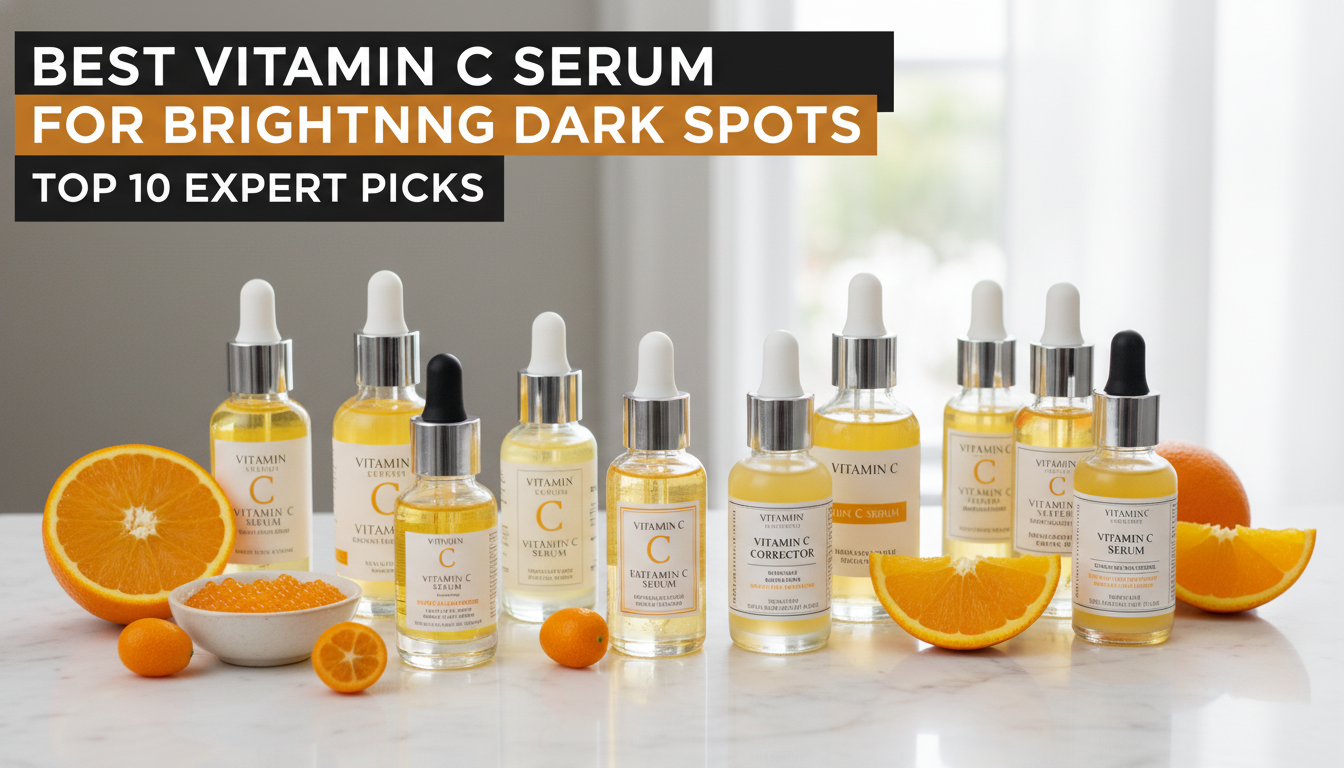
Hyper-pigmentation, sun damage, and the lingering shadows of past breakouts can make achieving an even skin tone feel like an uphill battle. While many ingredients promise a glow, few have the clinical backing and dermatological pedigree of Vitamin C. As a potent antioxidant, Vitamin C doesn’t just brighten the skin; it actively interferes with the production of excess melanin, the pigment responsible for dark spots.
However, not all Vitamin C serums are created equal. The market is saturated with formulations ranging from unstable liquids that oxidize in weeks to gentle derivatives that may not be strong enough for stubborn discoloration. To help you navigate the noise, we have curated the top ten Vitamin C serums specifically designed to tackle dark spots, backed by ingredient science and expert consensus.


Why Vitamin C is Essential for Dark Spots
In the world of skincare, Vitamin C (specifically L-ascorbic acid) is a “triple threat.” First, it acts as a tyrosinase inhibitor, meaning it slows down the enzyme that produces melanin. Second, it is a powerful antioxidant that neutralizes free radicals from UV exposure and pollution, preventing new spots from forming. Finally, it boosts collagen production, improving the overall texture and “bounce” of the skin.
Top 10 Expert-Recommended Vitamin C Serums
1. SkinCeuticals C E Ferulic
Often cited as the “gold standard” by dermatologists, this serum is backed by decades of clinical research. It features a precise blend of 15% pure Vitamin C, 1% Vitamin E, and 0.5% Ferulic Acid. This specific combination increases the efficacy of Vitamin C eightfold. It is particularly effective for stubborn sun spots and fine lines.
2. La Roche-Posay Pure Vitamin C10 Serum
If you have sensitive skin, high concentrations of L-ascorbic acid can sometimes cause tingling or redness. This formulation uses 10% pure Vitamin C combined with salicylic acid and neurosensine to gently exfoliate while soothing the skin barrier. It provides a noticeable glow without the irritation common in stronger formulas.
3. Drunk Elephant C-Firma Fresh Day Serum
Stability is the biggest challenge with Vitamin C. Drunk Elephant solves this by providing the serum in a “liquid-to-powder” format that you mix yourself upon first use. This ensures the 15% L-ascorbic acid is at its peak potency when it hits your skin, making it highly effective at fading post-inflammatory hyperpigmentation (PIH).
4. Paula’s Choice C15 Super Booster
This serum is designed for versatility. With a water-light consistency and 15% Vitamin C, it can be used alone or mixed into your favorite moisturizer. It includes peptides and skin-brightening ergothioneine, which help target uneven skin tone and dullness simultaneously.
5. Obagi Medical Professional-C Serum 20%
For those with resilient skin looking for maximum “oomph,” Obagi offers one of the highest concentrations of L-ascorbic acid available. The 20% strength penetrates deeply to target deep-seated discoloration. Because it is a medical-grade formula, it is exceptionally potent and yields results faster than many over-the-counter alternatives.
6. Sunday Riley CEO 15% Vitamin C Brightening Serum
Unlike many on this list that use L-ascorbic acid, this serum uses THD Ascorbate. This is an oil-soluble, ultra-stable derivative of Vitamin C. It is less likely to irritate and is excellent for those who find traditional serums too drying or “stinging.” It gives the skin an immediate, hydrated luminosity.
7. Maelove The Glow Maker
A cult favorite for those on a budget, The Glow Maker offers a formula remarkably similar to high-end luxury serums. It contains Vitamin C (15% L-ascorbic acid), E, Ferulic Acid, and hyaluronic acid for hydration. It is an excellent entry-level serum that delivers professional-grade brightening results.
8. Vichy LiftActiv Vitamin C Serum
Vichy focuses on purity and simplicity. This serum contains only 11 ingredients, with 15% Vitamin C and Vitamin E. It is fragrance-free and allergy-tested, making it a reliable choice for anyone looking for a clean, effective drugstore option that focuses purely on antioxidant protection and brightening.
9. CeraVe Vitamin C Serum with Hyaluronic Acid
CeraVe is known for protecting the skin barrier. Their Vitamin C serum contains 10% L-ascorbic acid in a protective tube that prevents oxidation. Crucially, it includes three essential ceramides to ensure that while you are brightening your dark spots, you are also keeping your skin’s moisture barrier intact.
10. SkinBetter Skincare Science Alto Defense Serum
For a comprehensive approach, this award-winning serum includes 19 different antioxidant ingredients. While it includes Vitamin C, it also utilizes a broad spectrum of other protectors to defend against environmental stress. It is an “all-in-one” solution for those who want to prevent future dark spots while correcting existing ones.
How to Choose the Right Formulation
When shopping for a serum to treat dark spots, the ingredient list is only half the story. To ensure the product actually works, consider the following technical factors:
- Concentration: Look for a range between 10% and 20%. Anything less may not be effective for dark spots; anything more can lead to significant irritation without added benefit.
- The pH Level: Pure Vitamin C (L-ascorbic acid) needs an acidic pH (below 3.5) to penetrate the skin. If a brand doesn’t disclose this, it may not be as effective.
- Packaging: Vitamin C is highly sensitive to light and air. Always opt for dark (amber), opaque, or airless pump bottles. If the serum turns dark orange or brown, it has oxidized and should be discarded.
- Supporting Ingredient Education: Look for “synergistic” ingredients like Ferulic Acid and Vitamin E, which stabilize Vitamin C and double its photoprotective qualities.
Pros and Cons of Vitamin C for Dark Spots
| Pros | Cons |
|---|---|
| Brightens overall skin tone and adds a “glow.” | Can be unstable and oxidize (spoil) quickly. |
| Protects against environmental damage and UV rays. | High concentrations may cause tingling or irritation. |
| Stimulates collagen to reduce fine lines. | Some formulations have a distinct “metallic” scent. |
| Works well in tandem with sunscreen to prevent new spots. | Requires consistent use (4–8 weeks) to see visible results on dark spots. |
Expert Tips for Maximum Results
To get the most out of your brightening serum, application technique matters. Apply your Vitamin C serum in the morning on clean, dry skin. While you can use it at night, its antioxidant properties are best utilized during the day when your skin is exposed to UV light and pollution.
Most importantly, never skip sunscreen. Vitamin C makes the skin more effective at fighting sun damage, but if you are trying to fade dark spots without using SPF 30 or higher daily, you are essentially taking one step forward and two steps back. UV exposure will re-darken the spots you are trying to lighten.
Frequently Asked Questions
How long does it take for Vitamin C to fade dark spots?
Skincare is a marathon, not a sprint. While you may notice an “instant glow” due to hydration and light-reflecting properties, significant fading of hyperpigmentation typically takes between 8 to 12 weeks of consistent daily use.
Can I use Vitamin C with Retinol?
Yes, but it is usually best to use them at different times of the day. Use Vitamin C in the morning to protect the skin, and use Retinol at night to repair the skin. Using them at the same time can sometimes cause irritation or alter the pH required for each to work effectively.
What color should my Vitamin C serum be?
Most pure L-ascorbic acid serums should be clear or a very pale champagne color. If the serum has turned dark orange, amber, or brown, the Vitamin C has oxidized into Dehydroascorbic acid. At this stage, it is no longer effective and may actually cause oxidative stress on the skin.
Does Vitamin C work on all skin tones?
Absolutely. Vitamin C is safe and effective for all Fitzpatrick skin types. In fact, it is highly recommended for deeper skin tones which are more prone to post-inflammatory hyperpigmentation, as it helps regulate melanin production without the risks associated with harsher bleaching agents.
Should I apply Vitamin C to damp or dry skin?
For L-ascorbic acid, it is best to apply to dry skin. Applying it to damp skin can increase penetration too quickly, which may lead to irritation, especially in higher concentrations.
—
Topic: Best vitamin C serum for brightening dark spots
Tags: #Vitamin #Serum #Brightening #Dark #Spots #Top #Expert #Picks