The Future of Renewable Energy: Innovations and Challenges
Renewable energy has moved from a niche alternative to the backbone of modern power systems. In 2023, renewables accounted for nearly 30% of global electricity generation, a figure that is projected to climb steadily as technology improves, costs decline, and climate imperatives intensify. Yet the journey toward a fully sustainable energy future is fraught with technical, economic, and geopolitical hurdles. This article offers a deep dive into the innovations that are reshaping the sector, the challenges that remain, and the policy pathways that can accelerate progress.
1. Solar Power: From Photovoltaics to Perovskite and Beyond
Solar energy has long been the poster child of renewables, but its evolution is far from plateaued. Traditional silicon‑based photovoltaic (PV) modules have seen efficiency gains of about 5% per decade, but the next wave of innovation is poised to break that ceiling.
- Perovskite Solar Cells: Perovskite materials offer a lightweight, tunable bandgap that can rival silicon in efficiency. Recent laboratory breakthroughs have achieved efficiencies above 25% in single‑junction cells, with tandem designs (perovskite on top of silicon) pushing the theoretical limit to 30%+. The key challenge is long‑term stability; researchers are now exploring encapsulation techniques that can protect perovskite layers from moisture and UV degradation.
- Concentrated Solar Power (CSP): CSP uses mirrors or lenses to focus sunlight onto a receiver, generating heat that drives steam turbines. Modern CSP plants incorporate molten salt thermal storage, allowing them to deliver power even after sunset. The integration of advanced heat‑transfer fluids and high‑temperature materials is expanding the operational range of CSP, making it competitive in regions with high insolation.
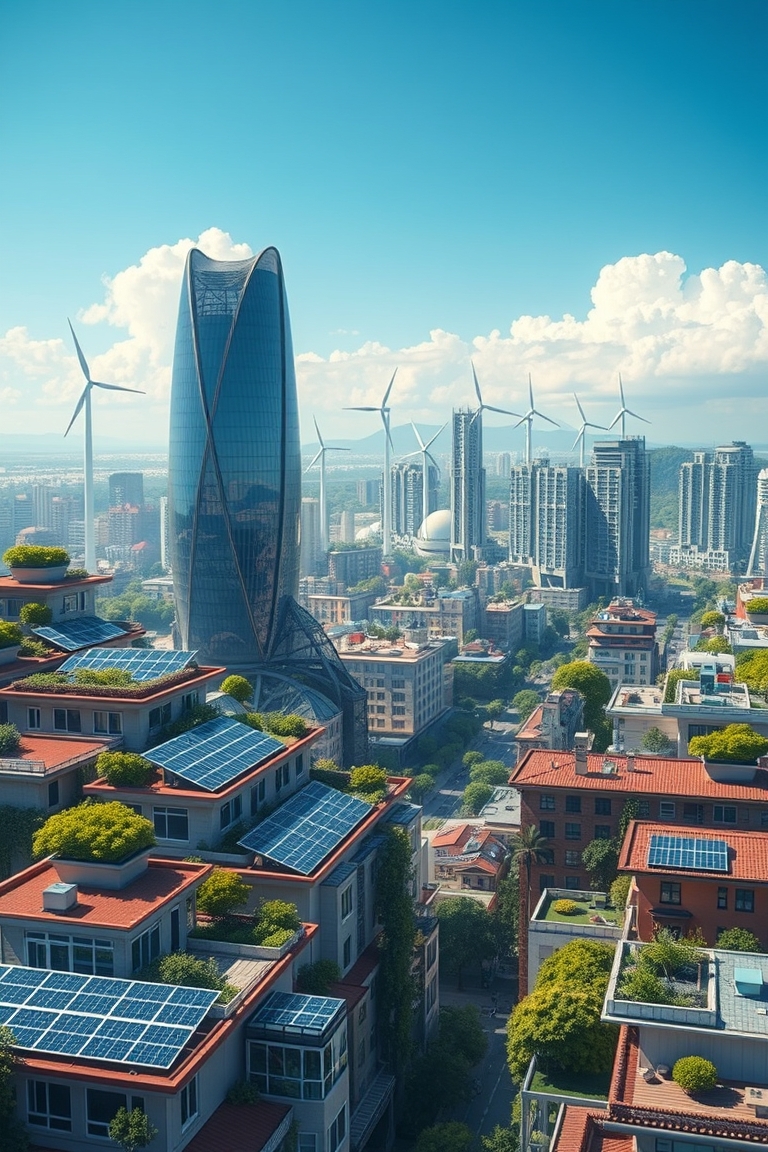
- Building‑Integrated Photovoltaics (BIPV): BIPV merges solar cells into building materials—windows, facades, and roofs—turning every surface into a power generator. Advances in transparent solar cells and flexible thin films are expanding the aesthetic and functional possibilities of BIPV, enabling architects to embed energy generation into the very fabric of the built environment.
- Floating Solar Farms: Deploying PV panels on bodies of water reduces land competition and can lower panel temperatures, improving efficiency. Floating arrays also help reduce evaporation, a critical advantage in water‑scarce regions.
While perovskite and BIPV promise higher efficiencies and new deployment avenues, the global solar market still relies heavily on large‑scale utility projects. The next decade will likely witness a hybrid model where utility‑scale plants coexist with distributed generation, bolstered by advanced inverters and smart grid integration.



2. Wind Energy: From Onshore to Offshore and Beyond
Wind power has benefited from continuous scale‑up, with turbines now exceeding 12 MW in offshore installations. The focus is shifting from sheer capacity to flexibility, resilience, and integration with storage solutions.
- Offshore Wind: Offshore sites offer higher and more consistent wind speeds. Recent projects in the North Sea, Baltic Sea, and U.S. East Coast have showcased turbines with 15–18 MW ratings. Floating wind turbines are expanding the frontier to deeper waters, unlocking vast untapped resources.
- Vertical‑Axis Wind Turbines (VAWT): VAWTs can capture wind from any direction, making them suitable for urban and rural settings where wind direction is variable. Advances in composite materials and blade design are improving their efficiency and reducing noise.
- Hybrid Wind‑Solar Systems: Combining wind and solar on the same site maximizes land use and smooths output variability. Integrated control systems can balance generation, reducing reliance on battery storage.
- Energy Storage Integration: Battery technologies—lithium‑ion, solid‑state, and even flow batteries—are becoming integral to wind farms. Storage allows wind farms to deliver power during low‑wind periods, enhancing grid stability.
Challenges persist: grid integration, marine environmental impacts, and the need for robust supply chains for turbine components. Addressing these will require coordinated research, policy incentives, and cross‑border cooperation.
3. Hydropower: Modernizing a Classic
Hydropower remains the largest single source of renewable electricity, but traditional large‑dam projects face environmental and social scrutiny. Modernization efforts focus on micro‑hydro, run‑of‑river, and pumped‑storage technologies.
- Micro‑Hydro and Run‑of‑River Systems: These systems have minimal ecological footprints and can be deployed in remote or rural areas, providing reliable baseload power without large reservoirs.
- Pumped‑Storage Hydropower (PSH): PSH acts as a giant battery, storing excess renewable energy by pumping water uphill and releasing it during peak demand. New high‑head PSH projects aim to increase capacity and reduce construction times.
- Turbine Efficiency Improvements: Advances in blade aerodynamics and materials are boosting turbine efficiency by 5–10%, directly translating into higher electricity output.
- Environmental Mitigation: Fish‑friendly turbines, sediment bypass systems, and habitat restoration projects are mitigating ecological impacts, making hydropower more socially acceptable.
Hydropower’s role as a flexible, dispatchable resource positions it as a critical partner in balancing high shares of intermittent renewables.
4. Emerging Technologies: Beyond the Conventional
While solar, wind, and hydro dominate the current landscape, a suite of emerging technologies promises to fill gaps in the energy mix.
- Geothermal Energy: Enhanced geothermal systems (EGS) can unlock energy from deep, hot rock formations that are otherwise inaccessible. Pilot projects in the U.S. and Europe are demonstrating scalable EGS solutions.
- Ocean Energy: Tidal and wave farms harness the kinetic energy of the sea. Recent advances in buoy design and energy conversion mechanisms are improving efficiency and reducing installation costs.
- Artificial Photosynthesis: Mimicking natural photosynthesis, these systems aim to convert CO₂ and sunlight into liquid fuels or chemicals, offering a carbon‑neutral fuel pathway.
- Solid‑State Batteries and Advanced Storage: Solid‑state batteries promise higher energy density, longer life, and improved safety. Flow batteries, on the other hand, provide scalable, long‑duration storage suitable for grid‑level applications.
- Smart Grids and Digital Twins: Advanced sensors, AI‑driven analytics, and real‑time data integration enable predictive maintenance, optimized dispatch, and dynamic pricing, enhancing overall system resilience.
5. Economic Dynamics: Cost Trajectories and Market Forces
The cost of renewable technologies has plummeted dramatically over the past decade. Solar PV, for instance, has seen a 90% cost decline since 2010, while onshore wind costs have fallen by 70%. This trend is driven by economies of scale, manufacturing efficiencies, and improved supply chains.
However, the transition to renewables is not solely a cost issue. Market dynamics such as the levelized cost of energy (LCOE), financing structures, and policy incentives shape investment decisions. Key economic factors include:
- Carbon Pricing: Implementing a carbon tax or cap‑and‑trade system internalizes the social cost of emissions, making renewables more competitive.
- Feed‑in Tariffs and Power Purchase Agreements (PPAs): Long‑term PPAs provide revenue certainty, attracting investment in large projects.
- Financing Innovation: Green bonds, sustainability‑linked loans, and public‑private partnerships are expanding the capital pool for renewable projects.
- Supply Chain Resilience: Diversifying suppliers and localizing production can reduce geopolitical risks and price volatility.
6. Policy Landscape: Global Trends and National Strategies
Policy frameworks are the linchpin of renewable deployment. The Paris Agreement, the EU Green Deal, and national net‑zero targets are catalyzing action worldwide. Notable policy mechanisms include:
- Renewable Portfolio Standards (RPS): Mandates that a certain percentage of electricity comes from renewables.
- Net‑Zero Emission Targets: National commitments to achieve zero net CO₂ emissions by 2050 or earlier.
- Subsidies and Incentives: Tax credits, rebates, and grants reduce the upfront cost of renewable projects.
- Grid Modernization Initiatives: Investments in transmission, distribution, and storage infrastructure enable higher renewable penetration.
- Research & Development (R&D) Funding: Government grants for breakthrough technologies accelerate commercialization.
Cross‑border cooperation is also essential. Projects such as the European supergrid, the U.S. Midwest Green Energy Corridor, and the African Renewable Energy Initiative illustrate how shared infrastructure can amplify benefits.
7. Social and Environmental Considerations
Rapid renewable expansion must be balanced with social equity and environmental stewardship. Key considerations include:
- Land Use and Biodiversity: Large solar farms and wind parks can compete with agriculture and wildlife habitats. Strategic siting and environmental impact assessments mitigate conflicts.
- Energy Justice: Ensuring that low‑income communities benefit from renewable projects through community ownership models and equitable pricing.
- Circular Economy: Recycling PV modules, turbine blades, and battery components reduces waste and recovers valuable materials.
- Resilience to Climate Impacts: Designing renewable infrastructure to withstand extreme weather events protects investments and maintains supply continuity.
8. The Role of Digitalization and AI
Digital technologies are transforming how renewables are designed, operated, and integrated:
- Predictive Maintenance: AI algorithms analyze sensor data to forecast equipment failures, reducing downtime and maintenance costs.
- Demand Response: Smart meters and AI-driven demand‑side management align consumption with renewable generation peaks.
- Grid Forecasting: Machine learning models improve short‑term and long‑term renewable output predictions, enhancing grid reliability.
- Energy Market Platforms: Blockchain and distributed ledger technologies enable peer‑to‑peer energy trading, increasing market efficiency.
9. Looking Ahead: 2030–2050 Outlook
Projections suggest that renewable energy could supply 80% of global electricity by 2050 if current trends continue. Key milestones include:
- 2025: Global renewable capacity reaches 10 GW of solar and 5 GW of offshore wind.
- 2030: Solar PV and wind together account for 50% of global electricity generation.
- 2040: Advanced storage technologies (solid‑state batteries, hydrogen) provide grid‑scale flexibility.
- 2050: Net‑zero emissions achieved, with renewables powering 80% of electricity and hydrogen playing a key role in sectors hard to electrify.
10. Conclusion: A Collective Path Forward
The future of renewable energy is bright, driven by relentless innovation, decreasing costs, and an urgent climate imperative. Yet the transition is not a simple technical upgrade; it requires coordinated action across technology, economics, policy, and society. By embracing emerging technologies, fostering resilient supply chains, and ensuring equitable access, the global community can realize a sustainable, low‑carbon energy system that powers economies, protects ecosystems, and secures a livable planet for future generations.
Stakeholders—from governments and utilities to investors and communities—must collaborate to unlock the full potential of renewable energy. The next decade will test our ingenuity, resolve, and commitment. The choice is clear: accelerate the transition, or risk the consequences of inaction.
For further reading, see related references on Wikipedia.
Leave a Reply